AI Agent Platform Updates: April 2026 News
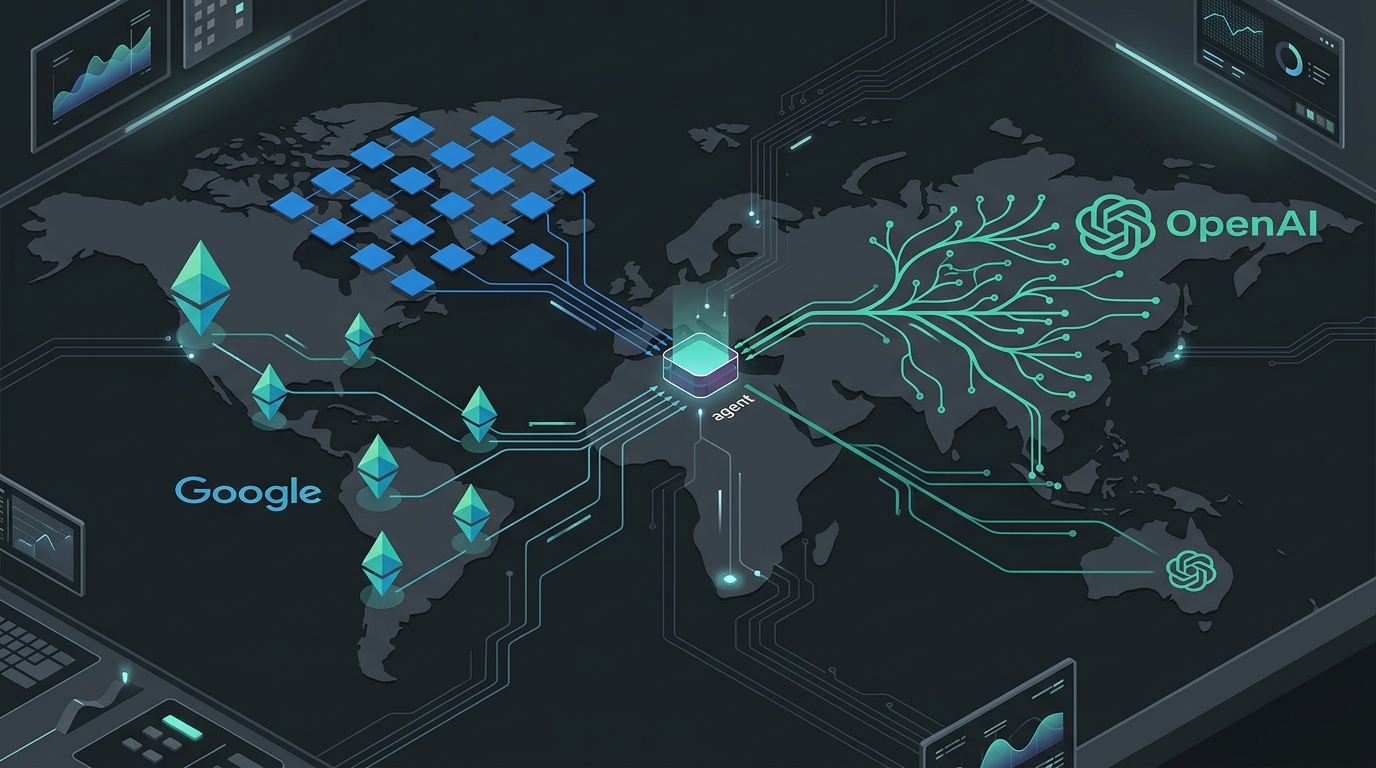
Google Cloud Next, GPT-5.5, Copilot Agent Mode GA, Snowflake Cortex Agents — April 2026 AI agent platform news and what it means for developers.
The past week delivered the most concentrated cluster of AI agent announcements we’ve seen this year. Google, OpenAI, and Microsoft each shipped product-grade updates that move agents from “experimental” to “default.” Here’s what shipped, what it means, and what engineers should be paying attention to.
Google Cloud Next 2026: From Vertex AI to Gemini Enterprise
Google used Cloud Next 2026 to do what Google rarely does — consolidate aggressively. Vertex AI is now the Gemini Enterprise Agent Platform. Google Agentspace got folded into a single product called Gemini Enterprise. The rebrand isn’t cosmetic; it signals that Google is treating agents as the primary unit of compute, not just another workload type.
The biggest announcements for agent builders:
- Workspace Studio — a no-code agent builder across Gmail, Docs, Sheets, Drive, Meet, and Chat. Users describe automations in plain language (“every Friday, ping me to update my tracker”), and Gemini generates the agent. It connects to third-party tools including Asana, Jira, Mailchimp, and Salesforce via webhooks or Apps Script.
- Agent Designer — a visual flow canvas for building agent workflows (preview).
- Agent Engine Sessions and Memory Bank — GA. Persistent context across agent interactions, which addresses one of the hardest operational challenges we see in production: state management across sessions.
- Agent Garden — prebuilt agent solutions for customer service, data analysis, and creative tasks. A free Express mode tier lowers the barrier for teams starting out.
- Managed MCP servers across Google Cloud with Apigee as an API-to-agent bridge. This is the first major cloud provider to ship managed MCP infrastructure — the protocol now has 97 million monthly SDK downloads.
- A2A protocol v1.0 in production at 150+ organizations. The Agent2Agent protocol handles cross-platform agent communication. If you’re building multi-agent systems that span teams or vendors, this is the standardization layer to watch.
- New TPU 8t and TPU 8i chips — 3× faster for training and 80% better performance per dollar. Google also noted that 75% of new code at Google is now AI-generated, up from 50% last fall.
For engineers: the most practically useful piece here is the managed MCP infrastructure. Rather than rolling your own MCP servers for every internal tool, Apigee now acts as an API-to-agent translation layer. Google’s Gemini Enterprise details are live.
If you’re already using Google AI Studio for prototyping, the migration path from Studio to the Gemini Enterprise Agent Platform is clearer now. Studio remains the prototyping surface; the Enterprise platform is where agents go when they need governance, memory, and cross-tool connectivity.
OpenAI Launches GPT-5.5
Just days after GPT-5.4, OpenAI pushed GPT-5.5 to Plus, Pro, Business, and Enterprise users in ChatGPT and Codex. The model ships as a “faster, sharper thinker for fewer tokens” — Sam Altman’s framing suggests cost efficiency is the headline, not just raw capability. It arrives as OpenAI’s Codex coding agent is being pushed into enterprise by Cognizant and CGI, with enterprise revenue now accounting for 40% of OpenAI’s total.
GPT-5.5 Pro goes to Pro, Business, and Enterprise tiers. The timing is telling: OpenAI is moving from monthly to weekly release cadences, treating model updates more like infrastructure patches than product launches.
Workspace agents in ChatGPT for Business also shipped, enabling teams to build agents that autonomously work across Slack, Gmail, and other tools. These agents gather context, follow workflows, and request approvals — the difference from “assistants” is that they initiate work rather than wait for prompts.
Microsoft: Copilot Agent Mode Is Now the Default
On April 22, Microsoft made Copilot Agent Mode GA and the default experience across Word, Excel, and PowerPoint. Satya Nadella called it “a big change to the Copilot experience.”
Agent Mode means Copilot now executes multi-step tasks inside Office apps with step-by-step visibility — drafting and restructuring Word documents, building formulas and tables in Excel, updating PowerPoint decks. The distinction from previous Copilot behavior: it performs work loops instead of generating one-shot responses.
For engineers building agents: this is significant precedent. Microsoft is normalizing the “agent does the work and shows its steps” pattern at the largest possible scale. What was a research concept in agentic loops is now the default UX for 450+ million Microsoft 365 users.
Snowflake: Cortex Agents and the Data Agent Stack
Snowflake expanded aggressively on the agentic data front. Snowflake Intelligence is now a personalized AI agent grounded in enterprise data. Cortex Code expanded as a governed coding agent for the entire data stack, available on desktop and CLI. Cortex AI Guardrails went live to protect against prompt injection — a critical addition given the security vulnerabilities discovered in agents this week.
The Security Story Nobody Wants to Hear
Security researchers found 28,663 systems with exposed agent control panels that anyone on the internet can access. OpenClaw-based agents, in particular, were found with unrestricted access to email, calendars, and search accounts. Hidden instructions on websites have been shown to trick agents into destructive actions — deleting databases, exfiltrating data.
This is the governance gap the adoption numbers hide. We wrote about the 88% production failure rate in our enterprise adoption analysis — and security governance is the primary reason. Agents with tool access but no security boundaries are a production incident waiting to happen.
What We’re Watching
Three signals from this week:
- Platform consolidation is accelerating. Google’s rebrand, Microsoft’s default switch, and Snowflake’s unified data agent stack all point toward the same conclusion: agents are becoming the primary interface to enterprise software. The tools layer is being absorbed into the agent layer.
- Release velocity is increasing. GPT-5.5 arriving weeks after 5.4, Microsoft’s GA-to-default switch overnight, Snowflake’s back-to-back Cortex updates — the cadence looks like browser release trains, not traditional AI product cycles.
- Security is still catching up. 40% of enterprise apps will feature agents by year-end, yet the first serious agent security failures are only just emerging. Infrastructure teams need agent governance tooling yesterday. For the platform updates that shipped since, see our May 2026 roundup.
Related Posts

What OpenAI, Anthropic, and Google Shipped in June 2026 — and What It Costs You
Claude Fable 5 at $10/M input tokens. Codex 26.609 with Developer mode. Gemini 3.5 Flash at 4x speed. Managed Agents with cron scheduling. And Anthropic's June 15 credit overhaul that changes the economics of autonomous coding. Here's what actually shipped, benchmarked, and priced.

The Week AI Went Agent-Native: Google I/O, Anthropic's Profit, and OpenAI's IPO
Google replaced the search box with 24/7 information agents. Anthropic hit its first profit and hired Karpathy. OpenAI filed for IPO. Here's what the biggest week in AI history means for the agent stack.
AI Agent Platform Updates: Early May 2026
GPT-5.5 Instant is ChatGPT's new default. AWS AgentCore Optimization previews, Gemini 3.1 Flash-Lite goes GA, Cloudflare ships Mesh.