CISA's AI Agent Warning and What It Means for Your Stack
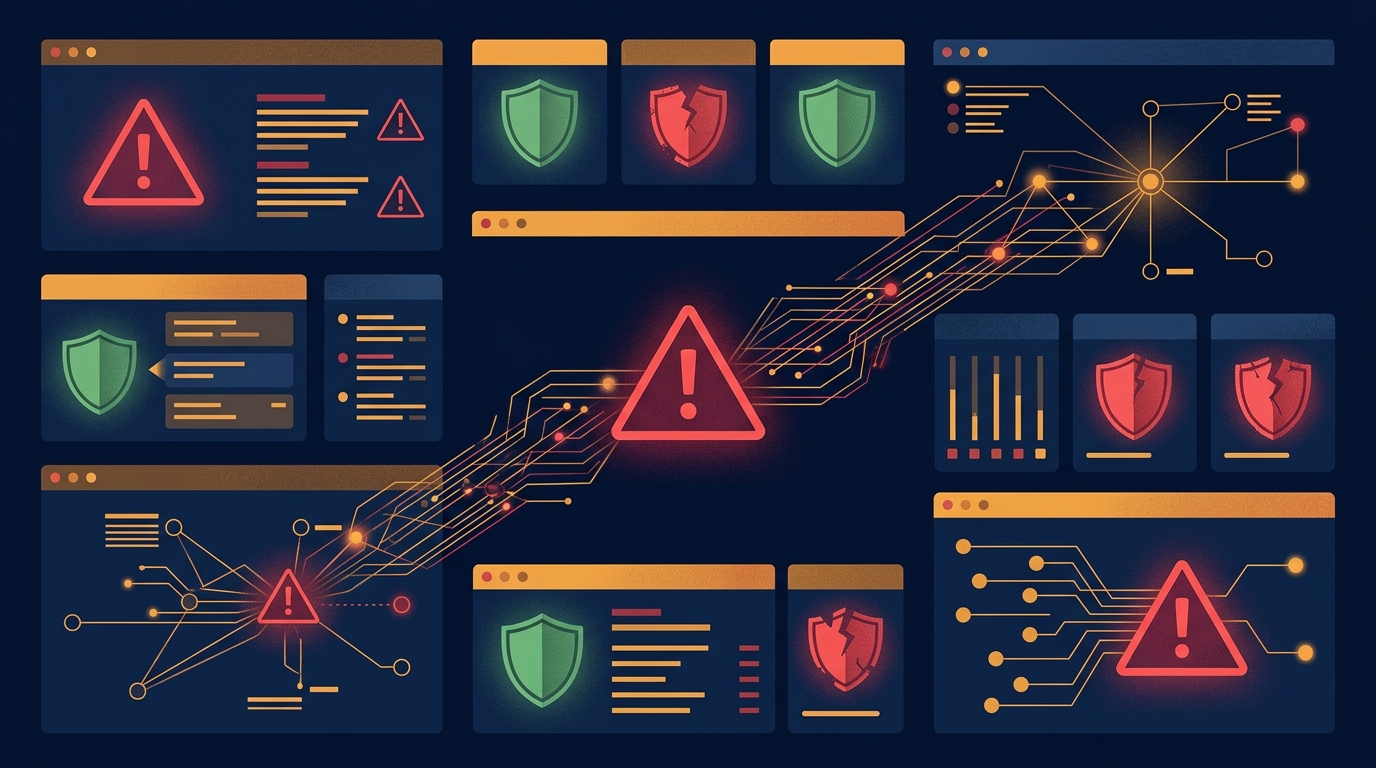
CISA and NSA say agent deployments are over-privileged and under-monitored. We break down the signal from the noise.
On May 1, 2026, CISA, NSA, and allied agencies published a joint advisory that is worth reading even if you’re not a compliance-driven enterprise. The short version: most production AI agent deployments are over-privileged, under-monitored, and using framework default configurations that are fundamentally insecure.
This lands the same week three LangGraph-related CVEs drew community attention. Together, the government warning and the framework-level vulnerabilities sketch a clearer picture of where agent security stands in mid-2026 — and where most teams are still vulnerable.
Here’s what shipped, what to patch, and how to act on the CISA guidance without slowing your agent roadmap.
The CISA Warning: Agents Have Too Much Access
The advisory is explicit: agencies are seeing agent configurations that grant broad tool access, lack identity separation, and provide no runtime guardrails for long-horizon autonomous tasks. The recommendation stack maps almost directly to the governance layers we’ve described in our deep-dive:
- Least-privilege tool access. Agents should hold scoped credentials per tool, not a shared service account with admin rights.
- Identity separation between agents and human operators. Agent actions need their own audit trail, not blended into the developer who authored the prompt.
- Monitoring at the agent execution layer, not just the API call layer. Token-level observability doesn’t catch when an agent uses a legitimate tool with malicious intent.
The advisory doesn’t prescribe tools. It does set a baseline expectation: if your agent fleet can read and write to production databases under a single credential, without per-action logging, you’re in the category the agencies are flagging.
Three CVEs in the Framework Layer
While the advisory addresses operational posture, the framework level had its own week. Three connected vulnerabilities surfaced across the LangGraph and LangChain ecosystem:
CVE-2026-28277 — Unsafe msgpack deserialization in LangGraph checkpointers. Affects langgraph-checkpoint-sqlite through version 1.0.9 (CVSS 7.2, HIGH). If an attacker can write to the SQLite checkpoint store, they can inject a crafted payload that reconstructs arbitrary Python objects on deserialization (GitHub Advisory). No public patch for this specific version yet.
CVE-2026-27022 — Redis checkpoint query injection. The RedisSaver and ShallowRedisSaver classes in @langchain/langgraph-checkpoint-redis construct RediSearch queries by directly interpolating user-supplied filter keys. An attacker can inject operators that bypass thread-isolation controls in multi-tenant setups (RAXE Advisory).
CVE-2026-27794 — BaseCache deserialization RCE. Affects langgraph-checkpoint prior to 4.0.0. Patches were released in 4.0.0 (NVD entry).
Additionally, CVE-2026-34070 — a path traversal vulnerability in LangChain’s prompt loading functions — was patched in langchain-core 1.2.22 and langgraph-checkpoint-sqlite 3.0.1.
The pattern here is not that LangGraph is uniquely vulnerable. It’s that checkpoint storage — the persistence layer every production agent depends on for state, resumption, and time-travel debugging — is suddenly a security boundary that needs hardening.
What to Do This Week
The CISA guidance is aspirational. The CVEs are actionable. Here’s our recommended triage order:
-
Patch LangGraph checkpoint packages immediately. Upgrade
langgraph-checkpointto 4.0.0+,langchain-coreto 1.2.22+, andlanggraph-checkpoint-sqliteto 3.0.1+. The deserialization and path traversal vectors are the most exploitable. -
Audit your checkpoint storage permissions. If your SQLite or Redis checkpoint stores are writable by the same credential your agents use to execute tools, you have the precondition for CVE-2026-28277 exploitation. Separate write access for the checkpoint layer from tool execution.
-
Review RedisSaver filter configurations. If you use
@langchain/langgraph-checkpoint-redisin a multi-tenant environment, audit the filter keys passed toRedisSaver. User-controllable filter values need validation before reaching the query builder. -
Apply least-privilege tool scoping. This maps to the CISA guidance directly. The governance toolkit post covers concrete patterns for scoped credentials and per-action audit trails.
Cloudflare Agents Week: Infrastructure for Scale
Cloudflare wrapped its first Agents Week 2026 with announcements that point to a broader industry shift. CTO Dane Knecht and VP Rita Kozlov opened with the math: if even a fraction of the world’s knowledge workers each run a few agents in parallel, the compute and networking layer needs fundamentally different architecture.
The relevant announcements for agent builders:
- AI Gateway evolved into an inference layer designed for agents, not just a rate-limiter for LLM calls. This reflects the reality that agents make multiple calls per user request, with complex retry and fallback patterns that a traditional gateway can’t handle.
- Browser rendering isolation for agents that need to interact with web UIs — a direct response to the security challenges of running untrusted code that can navigate to arbitrary URLs and execute JavaScript.
- New agent toolbox primitives that shift durable execution, state management, and agent-to-agent communication into the network edge.
Cloudflare’s bet is that the agentic cloud needs its own infrastructure layer, separate from how we serve web apps. The CISA advisory implicitly agrees: agents aren’t just another workload, they’re a new class of identity-bearing executor that needs controls native to how they operate.
The Bigger Picture
It’s no coincidence that CISA is publishing guidance on agent access controls in the same month that framework CVEs center on state persistence. As agents move from proof-of-concept to multi-step autonomous workflows, the state layer — checkpoints, memory stores, tool credentials — becomes the attack surface. Darktrace’s latest survey found that 92% of security professionals are concerned about agent impact. The agencies are now telling builders to close that gap before auditors do it for them.
Our take: treat checkpoint storage the same way you treat secrets management. Scope it. Audit it. Assume the storage layer is a boundary that needs the same rigor as the API keys and database credentials your agents already touch. Execution isolation is the other side of this coin — we’ve broken down the sandboxing architecture you’ll need here.
Teams that build this in now won’t need a retrofit when agent deployments become a standard audit scope item — which is exactly what these advisories are preparing the ground for.
Related Posts

Agent Governance: Secure, Observe, and Deploy AI Agents in Production
Microsoft, Google, and Okta shipped agent governance tooling this month. We reviewed the landscape for builders facing the 88% pilot failure rate.

AI Agent Platform Updates: Mid-May 2026
Microsoft patches RCE in Semantic Kernel, LangGraph ships 4.0.x, ADK for Java drops, and MCP Gateway 1.0 goes stable.
AI Agent Governance: The 2026 Deep Dive
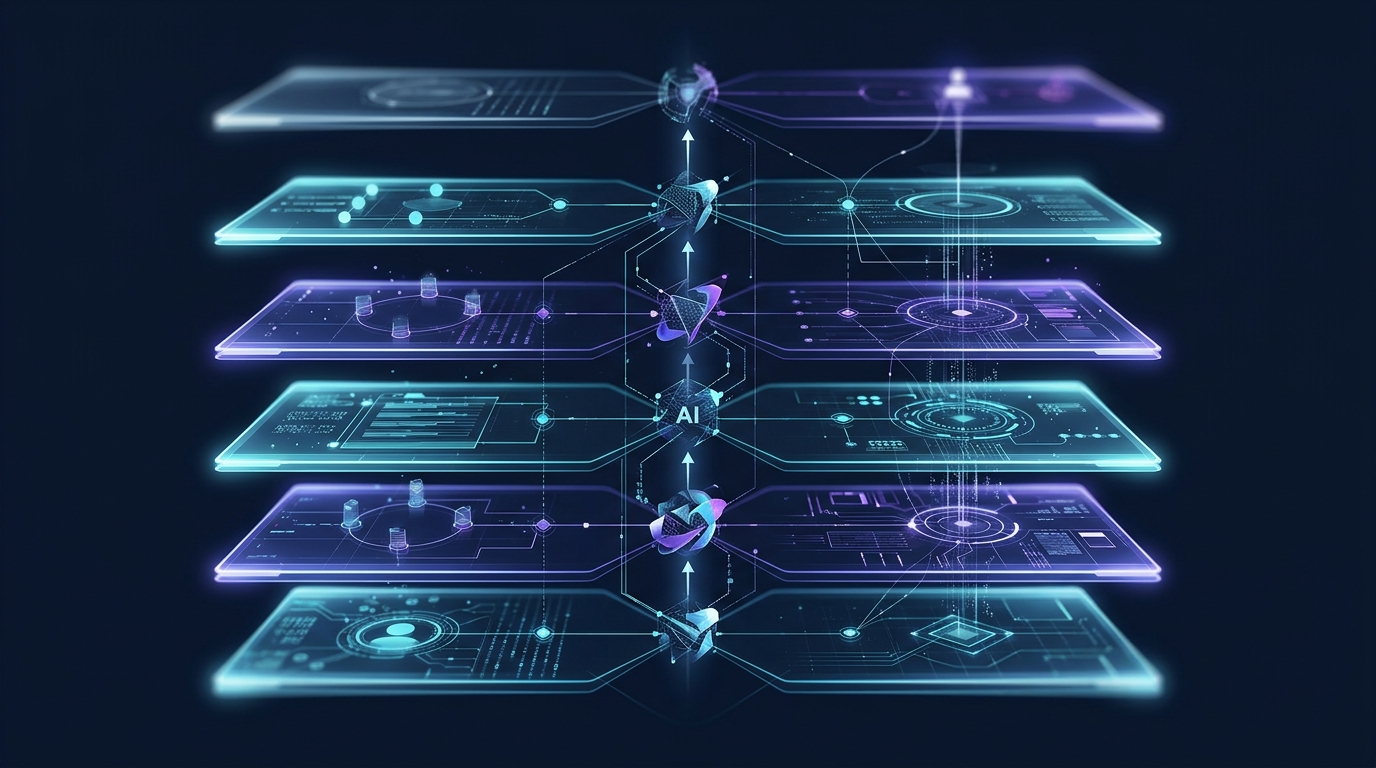
Traditional AI governance fails runtime agents. We build a six-layer architecture covering policy enforcement, audit trails, and kill switches.