What April's AI Agent Launches Mean for 2026
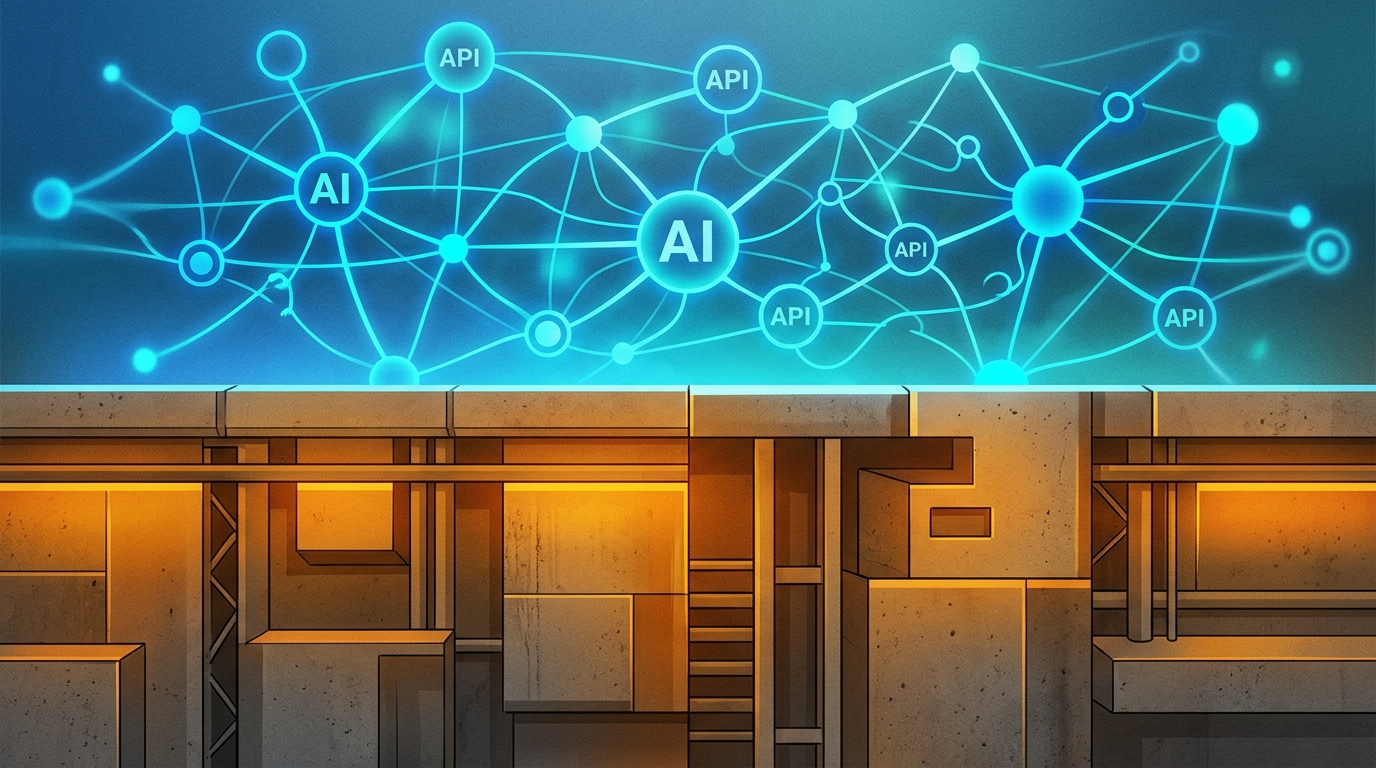
April 2026: OpenAI, Google, and Anthropic shipped major agent updates. The data shows why the pilot-to-production gap persists — and what actually ships.
April 2026 was the single densest month of AI agent platform releases we’ve seen. OpenAI shipped Workspace Agents on April 22, replacing Custom GPTs with always-on, memory-equipped workflows that plug into Slack and Salesforce. Google used Cloud Next ‘26 to push its Agent-to-Agent (A2A) protocol to v1.0, making multi-agent orchestration a first-class primitive across Vertex AI. And on April 16, Anthropic released Claude Opus 4.7 — positioning it as the model that finally handles long-running autonomous coding tasks with “rigor and consistency.” (OpenAI, Google Cloud, Anthropic)
All three moves point in the same direction: the platform vendors are betting that agentic automation is now a configuration problem, not a research problem. The tools exist. The APIs exist. Just plug them in.
The data from 2026 tells a different story.
The Platform Push vs. the Production Reality
The numbers are now converging enough to see clearly. Gartner reports that 80% of enterprise applications shipped or updated in Q1 2026 embed at least one AI agent, up from 33% in 2024. But only 31% of enterprises have at least one agent in production. Even more striking: 88% of agent pilots never graduate to production.
Let that last number sit for a second. Almost 9 out of 10 agent projects stall between proof-of-concept and a stable rollout. The top three blockers, per Forrester and Anaconda 2026 surveys:
- Evaluation gaps — 64% of engineering leads cite no reliable way to know if an agent is “correct” before shipping.
- Governance friction — 57% struggle with policy enforcement, audit trails, and access control.
- Model reliability — 51% report unacceptable error rates in production workflows.
These aren’t API problems. They aren’t solved by switching to Opus 4.7 or wiring up A2A. They’re infrastructure problems — and they’re the reason the gap between platform momentum and enterprise reality keeps widening.
What Platform Vendors Sell vs. What Engineering Leads Buy
Here’s the mismatch we keep seeing across conversations with teams:
| Platform Promise | Production Requirement |
|---|---|
| ”Connect agents to your SaaS tools” | Deterministic error handling when tools fail |
| ”Agents improve through memory” | Controlled state management with rollback |
| ”Multi-agent orchestration out of the box” | Conflict resolution and dependency ordering |
| ”Enterprise-grade security” | Role-scoped access, audit logs, kill switches |
The platforms are optimizing for demonstrability — what you can show in a 10-minute live demo. Engineering teams are optimizing for operability — what survives at 3 AM when an agent loops, burns through credits, or writes to the wrong database.
This is exactly why we wrote our deep-dive on agent governance architecture: the six-layer model (policy enforcement, audit trails, kill switches, and so on) isn’t theory. It’s what separates the 12% that shipped from the 88% that didn’t.
The Teams That Actually Ship Share Two Patterns
From our vantage point working with production agent deployments, two patterns separate successful rollouts from abandoned pilots.
Pattern 1: Constrained Scope, Deep Integration
The teams meeting ROI targets aren’t building general-purpose assistants. They’re building narrow agents with deep system integration. JPMorgan Chase reduced manual processing time in its payments division by 35% precisely because its agents operate within tightly bounded workflows — not because they can “do anything.” Walmart’s retail-specific “Wallaby” model handles 850 million catalog data points because it was trained on retail-specific data, not because a general LLM was pointed at a spreadsheet.
This is the opposite of how most AI agent frameworks are sold. LangGraph, CrewAI, and the OpenAI Agents SDK all enable broad multi-agent configurations — and most demos showcase exactly that flexibility. But flexibility is not reliability. Narrow, deeply integrated agents outperform broad, shallow ones in production every time.
Pattern 2: Evaluation Before Orchestration
Teams shipping agents invest in evaluation before they invest in multi-agent orchestration. This seems obvious in retrospect, but the platform demos run in the opposite order. Every major framework release this quarter showcased 5-agent swarms, not unit-test-quality evaluation pipelines.
The median payback on agent deployments that do ship is 5.1 months — and SDR-focused agents pay back fastest at 3.4 months, per BCG and Forrester. These are all evaluable by design: a sales agent’s output is measurable, a customer support agent’s resolution rate is trackable, a code review agent’s suggestions have clear diffs. The projects that fail are the vague ones — “internal knowledge assistant,” “research synthesizer” — where “good enough” has no operational definition.
What We’re Watching for Q2 2026
Three developments from April and early May matter for H2 planning:
Anthropic’s cyber safeguards on Opus 4.7. Anthropic released Opus 4.7 with “safeguards that automatically detect and block requests that indicate prohibited or high-risk cybersecurity uses,” with a Cyber Verification Program for legitimate security professionals. (Source) This is the first model-level policy enforcement we’ve seen from a frontier vendor — and it signals that governance is moving from post-deployment tooling into the model layer itself. Engineering teams should plan for model-level guardrails, not just prompt filters.
Google’s A2A v1.0 and the Agent Development Kit. The A2A protocol becoming a first-class standard means multi-agent workflows are shifting from proprietary orchestration to interoperable agent networks. The practical question: when agents can discover and invoke each other across organizations, what is your trust boundary? This matters for anyone building internal agent ecosystems today — the network effects will compound fast. (Source)
OpenAI Workspace Agents replacing Custom GPTs. This is the most consequential repositioning of the quarter. Custom GPs were conversational. Workspace Agents are “always-on” with memory, correction, and evolution through use. The move from ChatGPT as a tool to Workspace Agents as infrastructure means organizations now have two decision points: what to build internally vs. what to configure in OpenAI’s ecosystem. The lock-in calculus just changed. (Source)
The Takeaway
The platform vendors shipped in April like it was normal — like agents were now plumbing. But adoption data says the opposite: the deployment gap is growing, not shrinking. The teams that cross into the 12% that ship are the ones treating agents as infrastructure problems first, application problems second.
If your agent project is stuck in pilot, the bottleneck probably isn’t the model. It’s evaluation, governance, and scope control — the things no platform keynote mentions because they’re not demo-friendly. But they’re the only things that separate a proof-of-concept from a production system.
For deeper reading on building agents that survive in production, our team has published a framework comparison for 2026 that maps the tradeoffs, and a detailed post on enterprise TCO nobody talks about that breaks down where budgets actually go.
Related Posts

The Enterprise AI Revenue Gap: Why Cost-Cutting Metrics Are Lying to You
74% of enterprises want AI to grow revenue. Only 20% see it. The industry's cost-cutting obsession is hiding where agent ROI actually lives — and it's bigger.
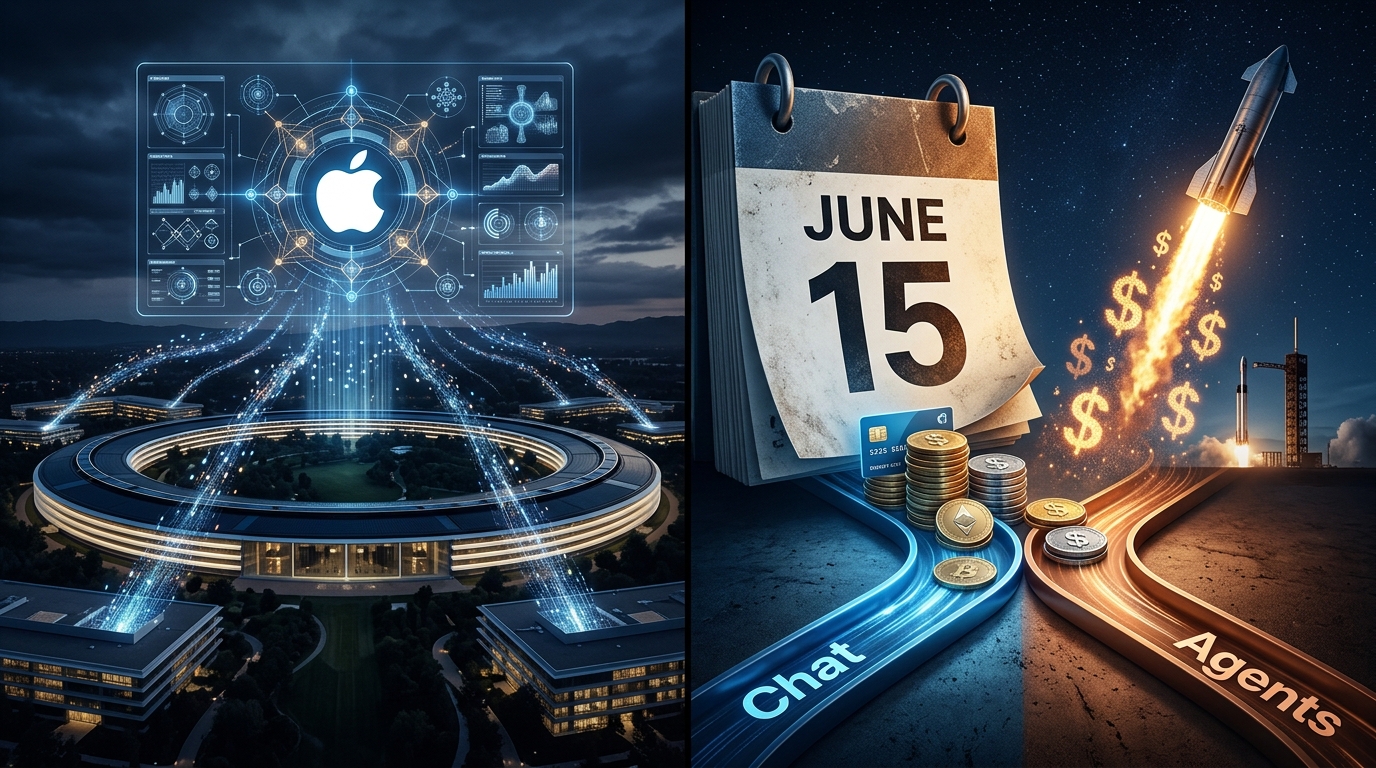
The Week the Agent Bill Came Due: WWDC, SpaceX's $75B IPO, and Anthropic's Billing Split
Apple put Claude on 2 billion iPhones. SpaceX raised $75B in the largest IPO in history. And Anthropic draws a line between 'chat' and 'agents' — starting tomorrow, June 15. Here's what the week that just reshaped the agent economy means for builders.

Enterprise AI Agent Use Cases That Actually Ship in 2026
Customer service agents resolve tickets at 9x lower cost. Coding agents review PRs at 1/66th the price. The AI use cases that ship — and the ones burning budget.