Multi-Agent Collaboration Patterns: Hierarchical, Peer-to-Peer, and Hybrid Architectures

An architectural deep dive into how multiple AI agents work together, exploring hierarchical command structures, peer-to-peer collaboration, and hybrid approaches—with practical guidance on choosing the right pattern for your system
Multi-Agent Collaboration Patterns: Hierarchical, Peer-to-Peer, and Hybrid Architectures
When a single AI agent isn’t enough, you need multiple agents working together. But how should they coordinate? The answer shapes everything from system reliability to cost efficiency. This deep dive explores the three dominant patterns for multi-agent collaboration—hierarchical, peer-to-peer, and hybrid—with practical guidance on when to use each.
Why Multi-Agent Systems?
Single agents hit limits. They struggle with tasks requiring diverse expertise, can’t easily parallelize work, and become unwieldy when handling complex multi-step workflows. Multi-agent systems address these challenges by dividing work among specialized agents.
The benefits are significant:
- Specialization: Each agent can be optimized for specific tasks with focused prompts and tools
- Parallelism: Independent subtasks can execute simultaneously
- Modularity: Agents can be updated, replaced, or scaled independently
- Robustness: Failure in one agent doesn’t necessarily crash the entire system
But coordination introduces complexity. Agents need to communicate, share context, handle conflicts, and maintain coherent overall behavior. The collaboration pattern you choose determines how these challenges are addressed.
Pattern 1: Hierarchical Orchestration
In hierarchical systems, a central orchestrator agent directs the work of subordinate agents. Think of it like a manager delegating tasks to team members.
How It Works
The orchestrator receives the initial task, breaks it into subtasks, assigns them to specialized agents, collects results, and synthesizes the final output. Subordinate agents typically don’t communicate directly with each other—all coordination flows through the orchestrator.
class HierarchicalOrchestrator:
    def __init__(self, llm, specialist_agents: dict):
        self.llm = llm
        self.specialists = specialist_agents

    async def execute(self, task: str) -> str:
        # Orchestrator decomposes the task
        plan = await self.llm.invoke(f"""
            Break this task into subtasks and assign each to
            a specialist: {list(self.specialists.keys())}

            Task: {task}
        """)

        # Execute subtasks through specialists
        results = {}
        for subtask in plan.subtasks:
            agent = self.specialists[subtask.assigned_to]
            results[subtask.id] = await agent.execute(subtask.description)

        # Orchestrator synthesizes results
        final = await self.llm.invoke(f"""
            Synthesize these results into a final response:
            {results}
        """)
        return final
Strengths
Clear accountability: The orchestrator maintains global state and ensures tasks complete. There’s no ambiguity about who’s in charge.
Easier debugging: All decisions flow through one point, creating a clear trace of what happened and why.
Controlled resource usage: The orchestrator can manage token budgets, rate limits, and parallel execution across all agents.
Natural task decomposition: Complex tasks naturally break into tree structures—research, then analyze, then synthesize.
Weaknesses
Single point of failure: If the orchestrator fails or makes poor decisions, the entire system suffers.
Bottleneck at scale: All communication flows through one agent, which can become overwhelmed.
Limited emergent behavior: Subordinates can’t discover better approaches through direct collaboration.
Orchestrator complexity: The coordinating agent needs to understand all specialist capabilities.
When to Use Hierarchical
- Well-defined workflows with clear task boundaries
- Systems requiring strong oversight and control
- Tasks where the decomposition is known in advance
- Environments where debugging and auditability matter
Real-World Examples
OpenAI’s ChatGPT with tools follows a hierarchical pattern—the main model orchestrates calls to code interpreter, browsing, and DALL-E.
LangGraph’s supervisor pattern explicitly implements hierarchical orchestration with a supervisor agent routing to worker agents.
Pattern 2: Peer-to-Peer Collaboration
In peer-to-peer systems, agents communicate directly with each other without a central coordinator. Each agent operates autonomously, negotiating and collaborating as needed.
How It Works
Agents maintain awareness of other agents’ capabilities and can request assistance directly. Collaboration emerges from many bilateral interactions rather than top-down direction.
class PeerAgent:
    def __init__(self, name: str, capabilities: list, llm, peer_registry):
        self.name = name
        self.capabilities = capabilities
        self.llm = llm
        self.peers = peer_registry

    async def execute(self, task: str) -> str:
        # Determine if we can handle this or need help
        analysis = await self.llm.invoke(f"""
            Task: {task}
            My capabilities: {self.capabilities}
            Available peers: {self.peers.list_capabilities()}

            Can I handle this alone? If not, which peer should I consult?
        """)

        if analysis.needs_peer:
            peer = self.peers.get(analysis.peer_name)
            peer_result = await peer.consult(task, self.name)
            return await self._integrate_peer_input(task, peer_result)

        return await self._execute_solo(task)

    async def consult(self, request: str, requester: str) -> str:
        # Handle incoming request from another peer
        return await self.llm.invoke(f"""
            {requester} is asking for help with: {request}
            Provide your expertise.
        """)
Strengths
Resilience: No single point of failure—if one agent goes down, others continue operating.
Scalability: New agents can join without modifying a central orchestrator.
Emergent solutions: Agents can discover novel collaboration patterns through direct interaction.
Reduced latency: Direct communication avoids round-trips through a coordinator.
Weaknesses
Coordination overhead: Agents spend tokens deciding who to consult and negotiating.
Potential for conflicts: Without central authority, agents may pursue conflicting approaches.
Harder to debug: Tracing execution through peer-to-peer interactions is complex.
Discovery challenges: Agents need mechanisms to find peers with relevant capabilities.
When to Use Peer-to-Peer
- Highly dynamic environments where capabilities change frequently
- Systems where resilience is critical
- Research scenarios exploring emergent multi-agent behaviors
- Domains where no single orchestrator could understand all subtasks
Real-World Examples
AutoGen’s group chat enables multiple agents to converse directly, with each deciding when to contribute.
Distributed robotics often uses peer-to-peer coordination for swarm behaviors.
Pattern 3: Hybrid Approaches
Most production systems combine hierarchical and peer-to-peer elements. A hybrid architecture uses orchestrators where control matters while allowing peer communication where flexibility benefits.
Common Hybrid Patterns
Hierarchical with peer consultation: An orchestrator assigns tasks, but specialists can consult each other before reporting back.
class HybridOrchestrator:
    def __init__(self, llm, specialist_teams: dict):
        self.llm = llm
        self.teams = specialist_teams  # Teams can collaborate internally

    async def execute(self, task: str) -> str:
        plan = await self.decompose(task)

        results = {}
        for subtask in plan.subtasks:
            team = self.teams[subtask.team_name]
            # Team internally uses peer collaboration
            results[subtask.id] = await team.collaborate(subtask)

        return await self.synthesize(results)
Federated orchestration: Multiple orchestrators coordinate peer-to-peer while each managing their own hierarchy of specialists.
Market-based allocation: Agents bid on tasks, combining peer negotiation with eventual assignment.
Strengths
Best of both worlds: Central coordination where needed, flexible collaboration elsewhere.
Pragmatic: Matches the reality that some tasks need oversight while others benefit from autonomy.
Incremental adoption: Can start hierarchical and add peer elements as the system matures.
Weaknesses
Complexity: Two coordination mechanisms to implement and maintain.
Potential confusion: Agents may be uncertain when to escalate vs. collaborate directly.
Choosing Your Pattern
Consider these factors when selecting a collaboration pattern:
Task Structure
- Well-defined pipeline: Hierarchical
- Iterative refinement: Peer-to-peer or hybrid
- Mixed complexity: Hybrid
Control Requirements
- High auditability needed: Hierarchical
- Experimentation valued: Peer-to-peer
- Balance of both: Hybrid
Scale Expectations
- Small team of agents (3-5): Any pattern works
- Large number of agents (10+): Peer-to-peer or federated hybrid
- Dynamic agent pool: Peer-to-peer with discovery
Failure Tolerance
- Must continue if components fail: Peer-to-peer
- Fail-fast is acceptable: Hierarchical
- Critical core, flexible edges: Hybrid
Implementation Considerations
Regardless of pattern, several concerns apply:
Message passing: Define clear protocols for agent communication. Include task context, expected output format, and error handling.
State management: Decide where shared state lives—central store, passed in messages, or distributed across agents.
Termination conditions: Multi-agent systems can loop indefinitely. Set clear completion criteria and timeout limits.
Cost control: Multiple agents multiply API costs. Implement budgets, caching, and selective retrieval.
Observability: Log agent interactions thoroughly. You’ll need this for debugging and optimization.
Framework Support
Major frameworks offer primitives for each pattern:
| Framework | Hierarchical | Peer-to-Peer | Hybrid |
|---|---|---|---|
| LangGraph | Supervisor pattern | Graph-based routing | Subgraphs |
| AutoGen | AssistantAgent chains | GroupChat | Custom topologies |
| CrewAI | Sequential process | Hierarchical with delegation | Mixed processes |
Key Takeaways
- Hierarchical patterns provide control and clarity at the cost of flexibility and single points of failure
- Peer-to-peer patterns offer resilience and emergence but complicate debugging and coordination
- Hybrid approaches combine both, matching coordination style to task requirements
- Pattern choice depends on task structure, control needs, scale, and failure tolerance
- Production systems typically evolve toward hybrid patterns as they mature
Multi-agent collaboration is still a rapidly evolving field. The patterns described here provide starting points, but expect to iterate as you learn what works for your specific domain and scale. Start simple—often a straightforward hierarchical design handles most needs—then add complexity as genuine requirements emerge.
For framework-specific implementations of these patterns, see our AutoGen vs CrewAI comparison, get hands-on with LangGraph, or explore detailed guides in our Framework Deep Dive series. For terminology reference, see the AI Agents Glossary.
Related Posts
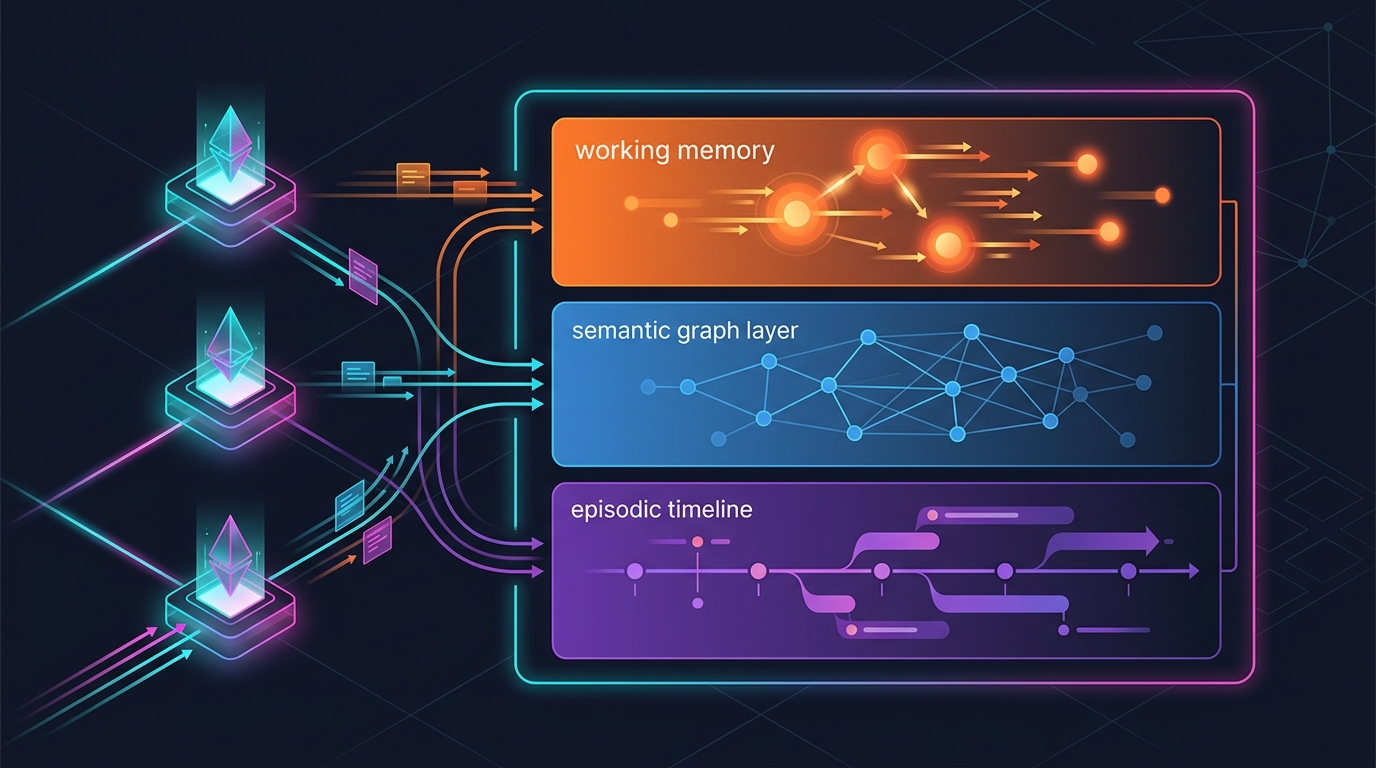
Multi-Agent Memory Architecture: Patterns for 2026
Shared, isolated, or hierarchical? We break down the three memory architectures production multi-agent systems use — with benchmarks, code patterns, and the tradeoffs nobody talks about.

Claude Code Subagents: Parallel Multi-Agent Workflows
Run parallel subagents in Claude Code with the Task tool. Multi-agent orchestration patterns, tool permissions, and real workflows that ship.
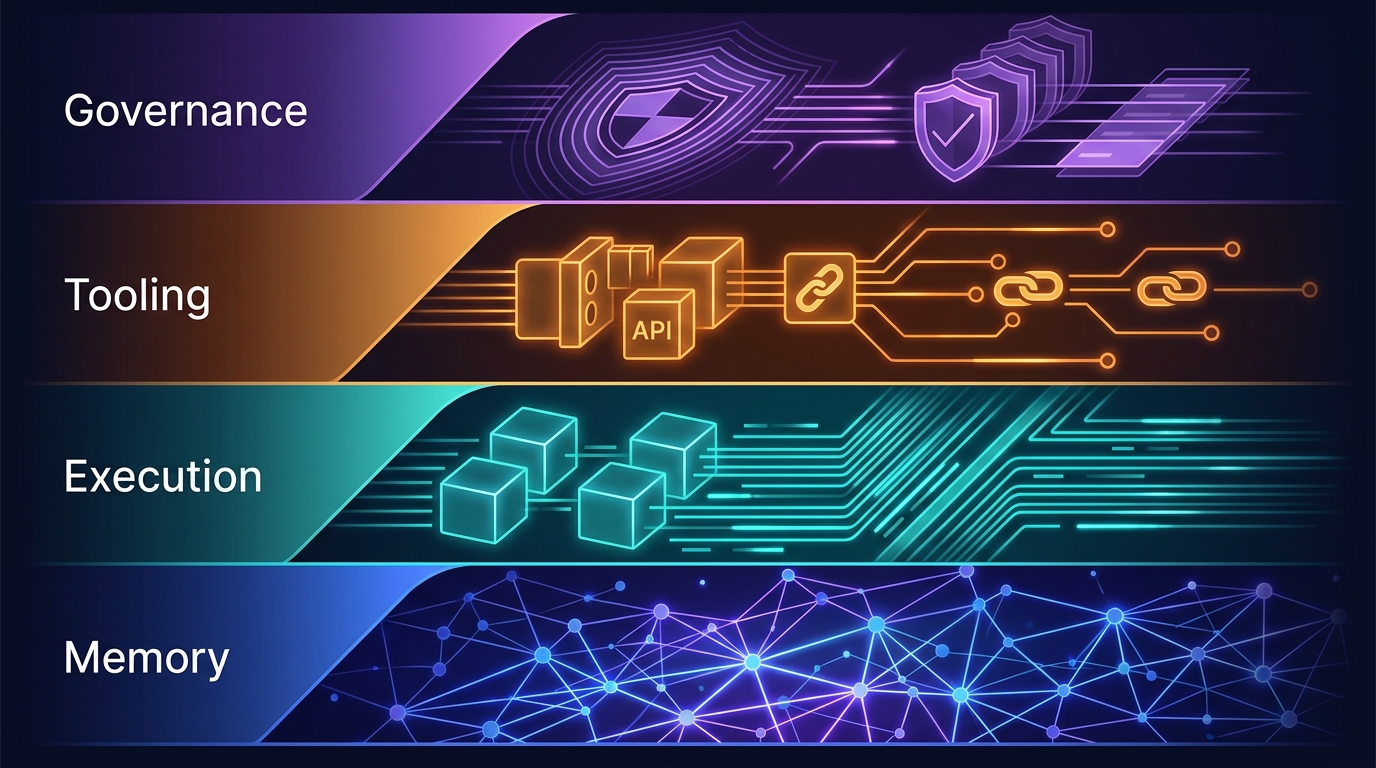
The Four-Layer Agent Infrastructure Stack: Where the Moat Actually Lives in 2026
A generation of agent startups will get commoditized. The ones that survive own one of four stateful layers: Memory, Execution, Tooling, or Governance. Here's how to tell the difference between a moat and glue code.